
Tredi Interiors Attend a Landmark Conference at the Annenberg Health Sciences Building
Desert Modern architecture is not a trend. It is a discipline. A philosophy rooted in climate, light, material honesty, and spatial clarity.
When Olivier Renault and Nathalie Renault of TREDI INTERIORS attended the architectural conference hosted inside the iconic Annenberg Health Sciences Building at Eisenhower—designed by the legendary E. Stewart Williams—the message was clear: Desert Modern is evolving, not fading.
The event brought together four architects shaping the next chapter of this architectural language:
- Barbara Bestor
- Sean Lockyer
- Leo Marmol
- Lance O’Donnell
Moderated by Julie Makinen, the discussion was not nostalgic. It was forward-looking. It addressed how materials, sustainability, technology, and human interaction are redefining modern living in the desert.
For TREDI INTERIORS, the alignment was immediate.
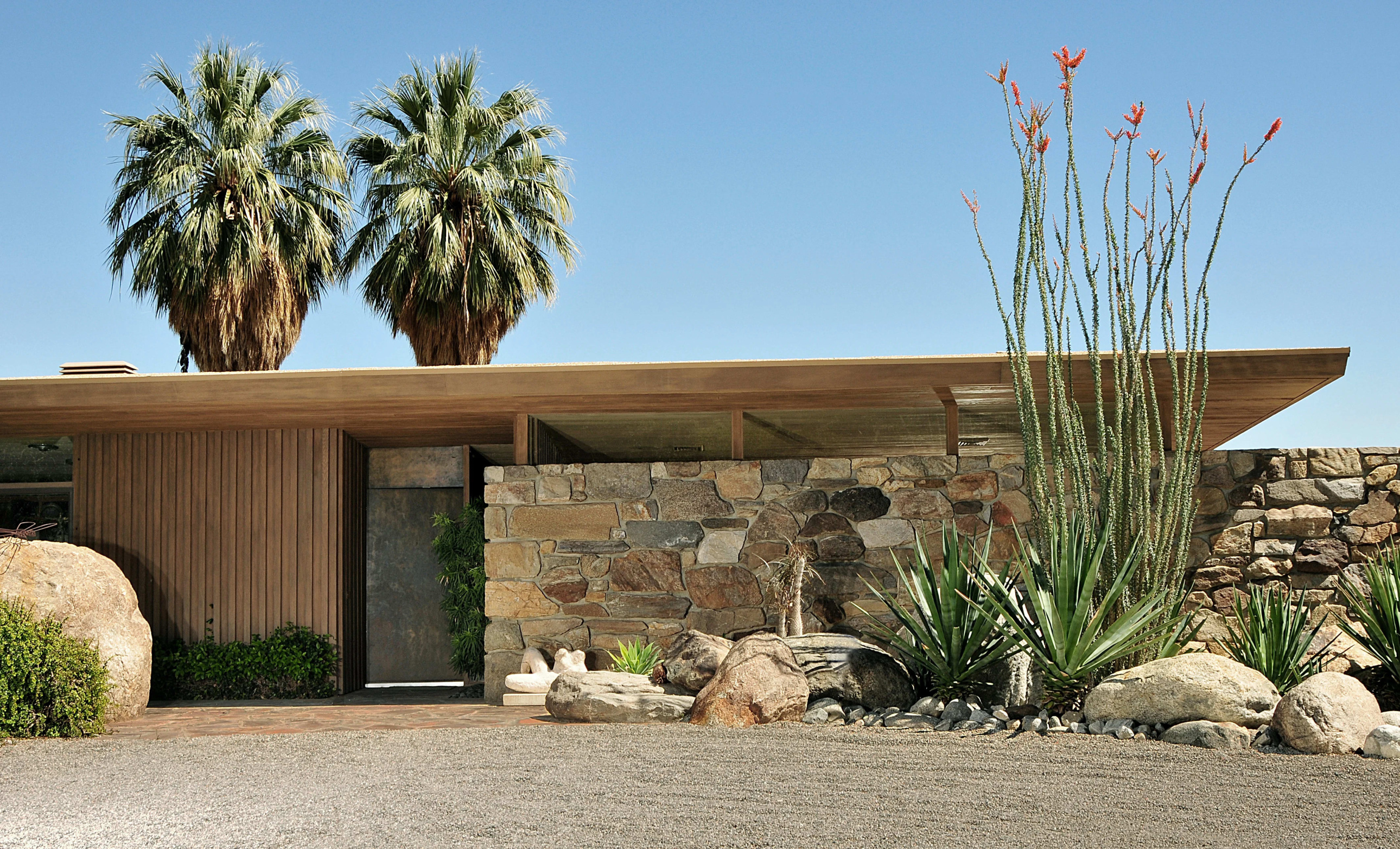
The Setting: Architecture That Defines an Era
The Annenberg Health Sciences Building stands as a midcentury masterpiece—clean lines, powerful horizontality, seamless indoor-outdoor integration. Designed by E. Stewart Williams, it embodies restraint and intention.
Hosting a dialogue about the future of Desert Modern inside this structure was not symbolic. It was strategic.
The message: evolution must respect origin.
This principle is foundational to how TREDI INTERIORS approaches both renovations and new construction throughout Palm Springs, Rancho Mirage, Silicon Valley, and beyond.

Four Architects. One Clear Direction.
Each architect presented visual case studies demonstrating how Desert Modern continues to adapt to contemporary life.
Barbara Bestor: Modernism with Cultural Energy
Barbara Bestor’s work blends high design with urban vitality. Her revitalization of midcentury icons and headquarters for global brands demonstrates that modernism is scalable.
Her message was direct: architecture must be flexible, adaptive, and socially relevant.
This directly mirrors the philosophy behind Italian kitchen systems specified by TREDI INTERIORS—modular, architectural, precise. Kitchens are no longer furniture. They are spatial infrastructure.
Sean Lockyer: The Emotional Power of Materials
Sean Lockyer emphasized craftsmanship and the emotional relationship between material and place.
Stone. Wood. Concrete. Steel.
Not decorative. Foundational.
This aligns perfectly with the European approach that TREDI INTERIORS imports into California projects:
- Fenix and high-performance matte finishes
- Natural veneers like walnut and oak
- Engineered stone surfaces with minimal joints
- Integrated lighting as architectural detail
Materials are not aesthetic afterthoughts. They shape experience.
Leo Marmol: Restoration and Legacy
Leo Marmol discussed preservation and reconstruction, including the celebrated Aluminaire House project. Restoration is not replication. It is interpretation.
This perspective resonates deeply with TREDI INTERIORS’ renovation work in midcentury homes. When updating a 1960s Palm Springs residence, the objective is not to erase history—it is to elevate it.
Modern Italian cabinetry systems integrate seamlessly into original architectural frameworks because they respect proportion, line, and structural rhythm.
Good design does not compete. It collaborates.
Lance O’Donnell: Architecture Rooted in Place
Lance O’Donnell spoke about sustainability and regional identity in the Coachella Valley. Desert architecture must respond to sun angles, heat gain, airflow, and landscape.
Interior design cannot ignore this reality.
At TREDI INTERIORS, kitchen and bath layouts are developed with:
- Orientation in mind
- Indoor-outdoor flow prioritized
- Shaded transitions respected
- Durable materials specified for desert climate
Modern living demands environmental intelligence.
The Kitchen: The New Architectural Core
One theme was undeniable throughout the conference: spatial hierarchy has changed.
The living room no longer dominates.
The kitchen now defines the house.
In high-end residential design, the kitchen determines:
- Circulation
- Sightlines
- Social interaction
- Lighting rhythm
- Material continuity
TREDI INTERIORS has been operating under this understanding for years.
An Italian-designed kitchen is not a cabinet layout. It is a spatial anchor. A monolithic island becomes sculpture. Integrated appliances disappear into architectural planes. Vertical storage transforms walls into design elements.
When guests gather, they gather around the island. When families connect, they do it in the kitchen.
Architecture may define structure—but the kitchen defines lifestyle.

Technology Has Entered the Conversation
The architects discussed evolution. That evolution includes technology.
Today’s kitchens integrate:
- Induction cooking with precision control
- Smart refrigeration systems
- Fully integrated ventilation
- Touchless fixtures
- App-connected ovens
Technology must not be visible chaos. It must be integrated intelligence.
TREDI INTERIORS specializes in integrating European cabinetry systems that conceal complexity while maintaining minimalist aesthetics.
Appliances become invisible.
Lighting becomes layered.
Function becomes seamless.
The result: clarity without compromise.

Materials and Texture: The Sensory Layer
Desert Modern architecture depends on material authenticity. Interiors must reinforce that.
TREDI INTERIORS selects materials with:
- Low reflectivity for desert light control
- Soft-touch matte surfaces
- Deep wood grains
- Architectural metals in bronze or champagne finishes
- Porcelain slabs that mimic natural stone with higher durability
Texture drives perception.
A polished surface reflects light harshly.
A matte surface absorbs and diffuses it.
In desert environments, this distinction is critical.
The architects spoke about emotional connection to space. That connection begins with touch.
Social Architecture: Designing for Interaction
Desert Modern homes historically blurred indoor and outdoor boundaries. Today, they also blur private and communal zones.
Open kitchens connect to:
- Outdoor lounges
- Pool terraces
- Covered patios
- Fire features
The kitchen island becomes a social hub.
Wine storage becomes display.
Coffee stations become morning rituals.
Hidden prep kitchens support entertaining scale.
TREDI INTERIORS designs with this social dynamic in mind. Cabinetry layouts anticipate movement. Seating integrates naturally. Lighting layers define zones without walls.
Design is no longer static. It is experiential.

Total Alignment with Architectural Vision
Olivier and Nathalie Renault left the conference with confirmation—not surprise.
The direction described by Barbara Bestor, Sean Lockyer, Leo Marmol, and Lance O’Donnell is the same direction TREDI Interiors has been implementing across projects in Palm Springs and Silicon Valley.
The alignment is structural:
- Respect for architectural integrity
- Integration of modern technology
- Emphasis on sustainable materials
- Elevation of the kitchen as central core
- Precision craftsmanship
TREDI INTERIORS has already collaborated within circles connected to this architectural community, reinforcing the shared commitment to design excellence.
This is not coincidence. It is shared philosophy.
Renovation vs. New Construction: Two Different Disciplines
The conference reinforced an important distinction:
Renovation
- Requires sensitivity to proportion and historical context
- Demands creative adaptation to structural limitations
- Must respect original architectural language
New Construction
- Allows integration from the foundation level
- Permits full kitchen-centered planning
- Enables technology infrastructure planning from day one
TREDI INTERIORS operates effectively in both arenas and is at the Forefront of Desert Modern Design
In renovation, Italian systems allow dimensional flexibility and custom integration.
In new builds, early collaboration ensures seamless appliance planning, electrical coordination, and lighting integration.
Precision matters. Planning matters more.

Forward-Thinking Desert Modern
Desert Modern is not frozen in 1955. It is evolving toward:
- Greater sustainability
- Higher-performance materials
- Integrated smart systems
- Stronger indoor-outdoor continuity
- Socially activated spaces
The architects at the Annenberg event made this clear.
TREDI INTERIORS is already positioned in this trajectory.
Italian manufacturing innovation often leads American markets by years. Advanced surface technologies, modular engineering, and precision production allow designers to deliver refined results with technical accuracy.
In luxury residential projects, this advantage is decisive.
Conclusion: Design in Total Adequation
The conference was more than an architectural lecture series. It was a validation of direction.
Olivier Renault and Nathalie Renault witnessed leading architects articulate a future that mirrors the philosophy of TREDI INTERIORS:
Architecture and interior design must operate as one discipline.
The kitchen must function as the heart of the home.
Materials must speak honestly.
Technology must integrate invisibly.
Spaces must encourage connection.
Desert Modern architecture is entering a new chapter—one that balances heritage with innovation.
TREDI INTERIORS at the Forefront of Desert Modern Design firmly within that chapter.


